What Is Calendered PVC Film? – Manufacturing Process, Properties & Applications
In our previous article, we compared the core differences between PVC film, PE film, EVA film, and PEVA film. One reader asked a very specific question: “I know PVC film, but what exactly does ‘calendered PVC film' mean? How is it different from regular PVC film?”
This is an excellent question. “Calendering” refers to a manufacturing process, not a material. PVC film can be produced through calendering, blown film, or casting processes, and calendering is the most mainstream and widely used method.
This article provides a systematic overview of calendered PVC film — its manufacturing process, key properties, product classifications, and major applications — to help B2B buyers fully understand this important product category.
1. What Is the Calendering Process?
Calendering is a processing method that uses the extrusion and shear forces between rollers to spread a viscous polymer material into a film or sheet. The process originated from European calenders in the 18th century, was applied to metal processing in the 19th century, and developed into
specialized equipment in the 1930s with the mass production of polyvinyl chloride (PVC).
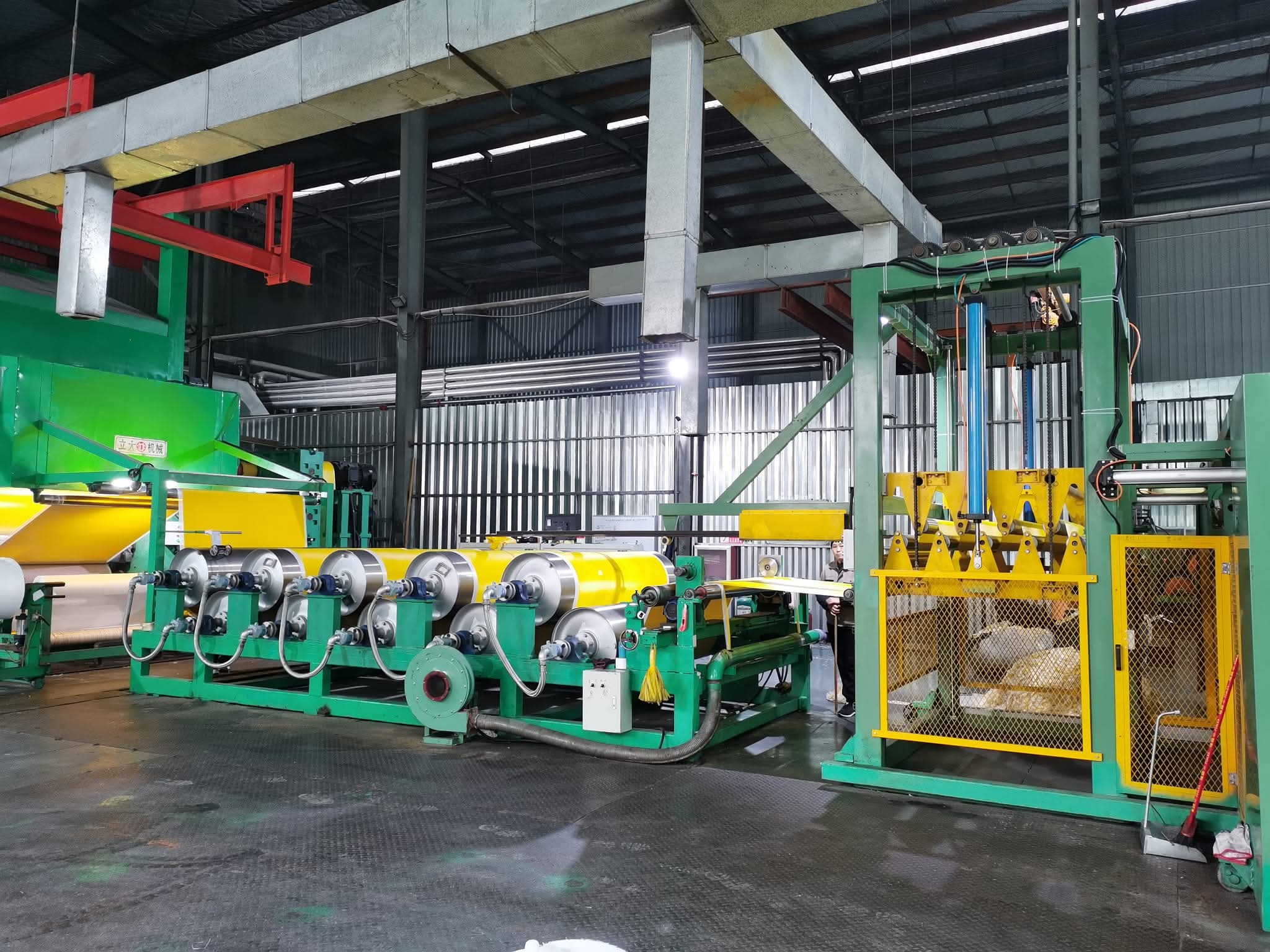
In simple terms: Heated and plasticized PVC material is fed through the gaps between multiple pairs of counter-rotating precision rollers. Through repeated extrusion and extension, it is formed into a thin film with specific thickness, width, and a smooth surface.
Typical calendering process flow: PVC resin & additives → Metering/batching → High-speed mixing → Internal mixing/plasticizing → Open milling → Extrusion/filtration → Four-roll/Five-roll calendering → Take-off → Embossing (optional) → Cooling → Winding → Inspection → Packaging
Modern calenders have evolved into four-roll or five-roll configurations, trending toward larger scale, higher speed, and greater precision, with product thicknesses reaching 0.05–1.0mm. During calendering, parameters such as roll temperature, roll speed, and speed ratio are precisely controlled to
adjust film thickness, width, and surface texture. A four-roll calender typically has three nips: the first controls feed rate, the second acts as a metering unit, and the third controls sheet thickness.
2. Calendering vs. Other PVC Film Production Processes
PVC film can be produced through three main processes, each with distinct characteristics:
| Process | Principle | Characteristics | Typical Applications |
|---|---|---|---|
| Calendering | Roller extrusion and extension | Uniform thickness, smooth surface, high production speed, stable quality | Rainwear film, packaging film, building decoration film, industrial film |
| Blown Film | Extrusion and inflation | Good puncture resistance, balanced strength in both directions | General packaging film, shrink film |
| Casting | Melt flow from die | High transparency, uniform thickness, higher cost- | High-transparency packaging film |
3. Key Properties of Calendered PVC Film
Calendered PVC film is widely used due to the following key properties:
1. Excellent Transparency
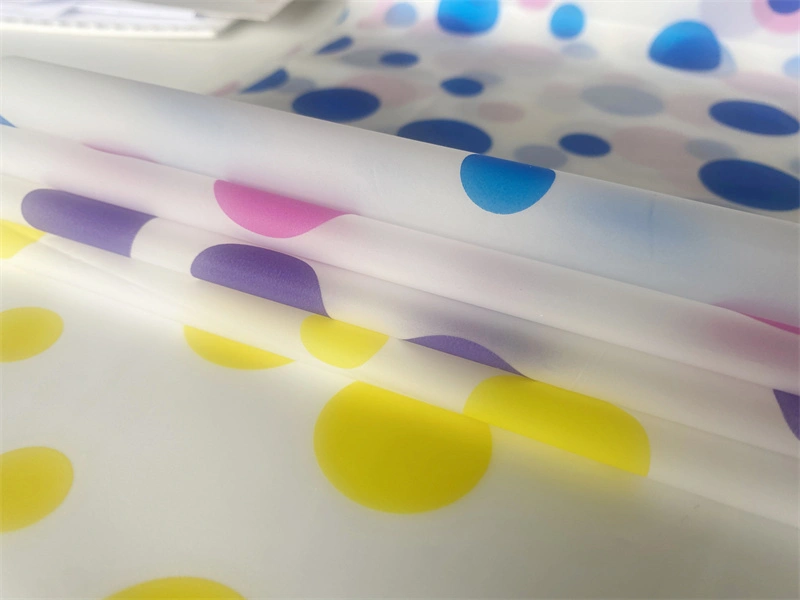
Calendered PVC film offers excellent transparency, surpassing that of polypropylene (PP). After special treatments (such as water bath processing), transparency can be further enhanced, making it suitable for products requiring high transparency such as book covers and stationery.
2. High Mechanical Strength
Calendered PVC film has high tensile strength and offers good tear resistance, puncture resistance, and abrasion resistance. This makes it perform well in industrial packaging, protective products, and other strength-demanding applications.
3. Excellent Water and Moisture Resistance
PVC film forms a natural moisture barrier that effectively blocks moisture and liquid penetration. This is the foundation for its wide application in rainwear, tarpaulins, and packaging.
4. Chemical Resistance
PVC film offers good resistance to oils, acids, alkalis, cleaning agents, and other chemicals, providing a clear advantage in industrial and medical applications.
5. Flame Retardancy
PVC material inherently offers good flame retardant properties, giving it a natural advantage in applications with high fire safety requirements.
6. Good Colorability
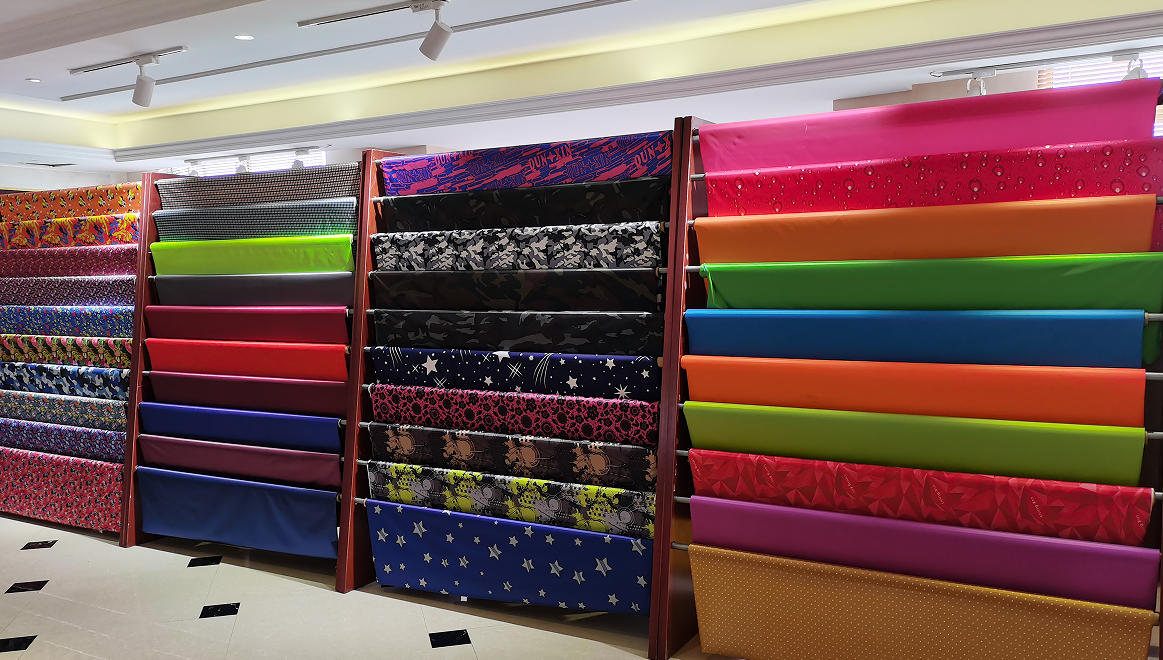
Common inorganic pigments, organic pigments, and some dyes can all be used for PVC film coloring, producing brightly colored film products. By combining with titanium dioxide, PVC film can achieve over 99% opacity.
7. Wide Range of Specifications and Customization
Calendered PVC film is available in single-layer thicknesses ranging from 60 to 600μm (0.06–0.6mm), with widths up to 1.6 meters. Various embossing rollers can produce different patterns including plain, granite, and wood grain finishes. Troas offers calendered PVC film in custom thicknesses, widths, colors, and surface finishes.
4. Classification of Calendered PVC Film
Based on plasticizer content, calendered PVC film can be classified as follows:
| Classification | Plasticizer Content | Characteristics | Typical Applications |
|---|---|---|---|
| Rigid PVC Film | 0–5 parts | No or minimal plasticizers, good rigidity, high strength | Building decoration, stationery covers, packaging sheets |
| Semi-Rigid PVC Film | 6–25 parts | Between soft and rigid, balanced flexibility and strength | Packaging materials, industrial film |
| Flexible PVC Film | 25+ parts | Soft, elastic, comfortable hand feel | Rainwear, tablecloths, shower curtains, inflatable toys |
Rigid PVC accounts for approximately two-thirds of the market, while flexible PVC accounts for one-third. By thickness, products below 0.25mm are generally called “film,” while products between 0.25–2.5mm are called “sheet" .
For buyers: With the same calendering process, adjusting the plasticizer content in the formulation can produce products ranging from rigid to flexible. Troas can provide flexible, semi-rigid, or rigid calendered PVC film based on specific application requirements.
5. Major Applications of Calendered PVC Film
Calendered PVC film has an extremely wide range of applications, covering building materials, packaging, consumer goods, industry, and more-8. Key application areas include:
| Application Area | Share | Typical Products |
|---|---|---|
| Building & Decoration | ~60% | Flooring, ceilings, wallcoverings, decorative film, window seals |
| Packaging | 2nd largest | Industrial packaging, food packaging, shrink film, stretch film |
| Rainwear/Protective Products | Major | Raincoats, rain ponchos, industrial protective wear |
| Agriculture | Major | Greenhouse film, nursery film, ground cover film |
| Medical | Major | Medical packaging, medical protective products |
| Consumer Goods | Broad | Tablecloths, shower curtains, stationery, inflatable toys, bags, luggage |
| Industrial | Major | Electrical insulation materials, salt field covers, engineering waterproofing |
Detailed by sector:
Building & Decoration: Building materials represent the largest application area for calendered PVC film, accounting for approximately 60%-. Calendered PVC film is used in flooring, ceilings, wallcoverings, decorative films, and more, offering lightweight, thermal insulation, moisture resistance, flame retardancy, and ease of installation.
Packaging: Packaging is the second-largest application area-. Calendered PVC film is used in industrial packaging, food packaging, heat-shrink film (for beverage bottles, wine bottles), and high-transparency stretch film.
Rainwear & Protective Products: Calendered PVC film offers excellent waterproofing and softness, making it a common material for raincoats, rain ponchos, and industrial protective wear-. Troas‘ calendered PVC film has mature application experience in this field.
Agriculture: PVC calendered film holds a significant position in agricultural greenhouse film. This film offers good thermal insulation and light transmittance, is soft and easy to shape, and is suitable as outer covering material for greenhouses and tunnels.
Consumer Goods: Calendered PVC film is widely used in tablecloths, shower curtains, stationery, inflatable toys, handbags, luggage, and other consumer products.
6. Sourcing Considerations for B2B Buyers
If you are sourcing calendered PVC film for your products, here are key points to consider:
1. Define end-use requirements
| Core Requirement | Recommended Type | Explanation |
|---|---|---|
| Softness and comfort (rainwear, tablecloths) | Flexible PVC film | Higher plasticizer content, soft hand feel |
| Rigidity and strength (packaging sheets, stationery) | Rigid PVC film | Lower plasticizer content, dimensional stability |
| Between the two | Semi-rigid PVC film | Balanced flexibility |
Calendered PVC film typically ranges from 60 to 600μm in thickness, with widths up to 1.6 meters. Troas offers custom specifications.
3. Confirm surface treatment requirements
Is embossing required (plain, wood grain, granite, etc.)? Is a matte or glossy finish needed? Transparent or colored? These factors affect product selection.
4. Compliance requirements
If your target market is the EU or North America, verify whether the product meets REACH, RoHS, and other environmental standards.
7. What Troas Can Do for You
Troas offers calendered PVC film in flexible, semi-rigid, and rigid grades for a wide range of applications including rainwear, protective products, packaging, building decoration, and consumer goods-.
Core capabilities:
-
Adjustable thickness: Customized from 60 to 600μm
-
Flexible specifications: Custom width, color, and surface treatment
-
Varied surface finishes: Plain, embossed, matte, gloss, and more
-
Consistent quality: 20 years of production experience ensuring stable delivery for large-volume orders
8. Summary
Calendered PVC film is a polyvinyl chloride film product manufactured through the calendering process. The calendering process gives it the core advantages of uniform thickness, a smooth surface, and consistent quality.
From building decoration to rainwear protection, from food packaging to agricultural greenhouses, calendered PVC film — with its excellent transparency, mechanical strength, moisture resistance, chemical resistance, and flame retardancy — has become one of the most widely used PVC film products.
The key to selecting calendered PVC film is: What level of softness, thickness, and surface finish does your end product require? What compliance requirements does your target market have? Once you have the answers, the selection becomes clear.
Troas will continue our weekly Tuesday updates, delivering practical content on functional films and waterproof fabric applications.
📩 To request calendered PVC film samples or product catalogs: Contact Us
📁 Explore more waterproof fabrics and films that meet market demands: View Products
🏭 Learn more about Troas‘ production strength and quality control system: About Us
Next week preview: We’ll dive into EVA film applications in food packaging — compliance, performance advantages, and sourcing considerations.
PVC Film vs PE Film vs EVA Film vs PEVA Film – Differences and Selection Guide
Related Article