PVC Film vs PE Film vs EVA Film vs PEVA Film – Differences and Selection Guide
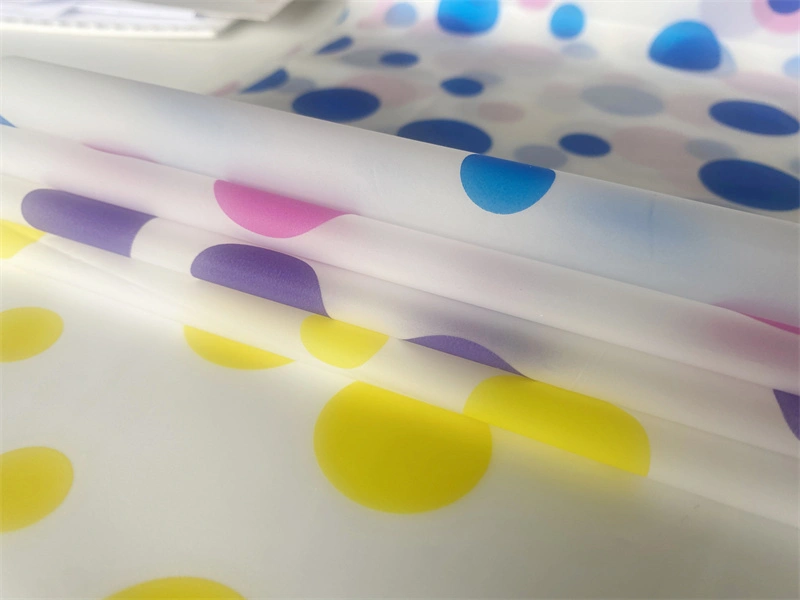
Over the past few months, we have built a comprehensive technical knowledge base around PVC coated fabrics for rainwear — from base fabric selection and coating comparison to waterproof ratings, breathability, and durability evaluation. This week, we launch a new product series: functional films.
Troas'product portfolio covers two major categories: PVC coated fabrics (polyester/nylon base + PVC coating) and functional films — including PVC film, PE film, EVA film, PEVA film, and more. This article is the first in our film series, providing a systematic comparison of four common waterproof film materials to help B2B buyers understand their differences and make informed choices.
1. Basic Definitions
PVC Film (Polyvinyl Chloride Film)
PVC film is a film material made from polyvinyl chloride resin with the addition of plasticizers, stabilizers, and other additives, produced through calendering or blown film processes. PVC film is one of the most traditional waterproof films, offering good waterproofing, weather resistance, and chemical resistance.
PE Film (Polyethylene Film)
PE film is a film material made from polyethylene resin through blown or cast film processes. PE film is the largest-volume plastic film variety, accounting for over 40% of total plastic film consumption. PE film offers good moisture resistance, toughness, and heat sealability, with convenient processing and low cost. Depending on the manufacturing method, PE film can be classified as low-density (LDPE), medium-density, high-density (HDPE), and other types
EVA Film (Ethylene Vinyl Acetate Film)
EVA film is a polymer film material made from the copolymerization of ethylene (E) and vinyl acetate (VA). The higher the VA content, the better the transparency, softness, and toughness of EVA film. EVA film offers good flexibility, low-temperature impact resistance, and heat sealability.
PEVA Film (Polyethylene Vinyl Acetate Film)
PEVA is a blend of polyethylene (PE) and EVA. The ratio of PE to EVA can be adjusted to meet different application requirements. PEVA combines the strength of PE with the flexibility of EVA and is currently a highly regarded eco-friendly film material in the market.
2. Core Differences – Comparison Table
| Dimension | PVC Film | PE Film | EVA Film | PEVA Film |
|---|---|---|---|---|
| Main Component | PVC resin | Polyethylene resin | Ethylene + VA copolymer | PE + EVA blend |
| Density (g/cm³) |
~1.32
|
~0.92 (LDPE) | ~0.91–0.93 | ~0.91–0.93 |
| Flexibility | Requires plasticizers | Moderate | Naturally soft | Soft and elastic |
| Low-Temp Performance | Becomes stiff and brittle | Moderate | Excellent | Superior (-70°C)- |
| Transparency | Good | Moderate | Excellent | High |
| Heat Sealability | Good | Good | Excellent | Good |
| Compliance | Plasticizer concerns | Phthalate-free | Phthalate-free | Phthalate-free, heavy metal-free |
| Biodegradable | No | Yes | Yes | Yes |
| Cost | Lower | Lowest | Medium | Medium |
Detailed explanation by dimension:
Density and Weight: EVA and PEVA have a density of approximately 0.91–0.93 g/cm³, PE (LDPE) has a density of approximately 0.92 g/cm³, while PVC has a density of approximately 1.32 g/cm³. This means PE/EVA/PEVA film is about 30% lighter than PVC film at the same thickness and area — offering significant advantages in shipping costs and end-product lightweighting.
Cost: PE film is the lowest-cost among the four materials. PVC film is the next most cost-effective. EVA and PEVA are relatively higher in cost, but PEVA commands a clear compliance premium in Western markets due to its phthalate-free and heavy metal-free properties.
Flexibility: EVA and PEVA are naturally soft and elastic without requiring plasticizers. PE film offers moderate flexibility. PVC, by contrast, requires plasticizers to achieve softness. This difference becomes more pronounced at low temperatures — EVA and PEVA maintain good flexibility at low temperatures while PVC becomes stiff and brittle.
Compliance: PE, EVA, and PEVA are all phthalate-free and heavy metal-free. PEVA fully complies with international toy safety standards such as EN-71 Part 3 and ASTM-F963. With increasing global restrictions on plasticizers in PVC, PE, EVA, and PEVA are becoming the preferred alternative materials for many brands.
3. Application Scenarios and Selection Recommendations
| Application | Recommended Material | Rationale |
|---|---|---|
| Rainwear/Protective Clothing | PVC Film / EVA Film | PVC: low cost, reliable waterproofing; EVA: soft, comfortable, good low-temp performance |
| Food Packaging | PE Film / EVA Film / PEVA Film | Non-toxic, odorless, food contact safe |
| Medical Protection | EVA Film / PEVA Film | Plasticizer-free, heavy metal-free, medical-grade safe |
| Tablecloths/Shower Curtains | PEVA Film | Lightweight, odorless, compliant |
| Stationery/Gift Packaging | PVC Film / PEVA Film | PVC: high transparency, good printability; PEVA: better eco-profile |
| Industrial Packaging/Protective Film | PE Film / PVC Film | PE: largest volume, lowest cost; PVC: chemical resistance |
| Cold-Chain/Frozen Packaging | EVA Film / PEVA Film | Superior low-temp resistance, -70°C without brittleness |
| Agricultural Cover Film | PE Film / EVA Film | PE: 90% light transmittance, lowest cost; EVA: better insulation |
Rainwear and Protective Clothing: Both Troas PVC film and EVA film can be used for rainwear production. PVC film offers lower cost and reliable waterproofing — a common choice for price-sensitive bulk orders. EVA film offers better softness and low-temperature performance, suitable for mid-to-high-end rainwear requiring higher wearing comfort.
Food Packaging: PE film is the largest-volume film material in food packaging applications. EVA film offers good heat seal strength, optical properties, and low-temperature toughness, widely used in flexible food packaging and frozen food packaging. PEVA film is non-toxic, odorless, and heavy metal-free, meeting food contact safety standards.
Medical Protection: EVA film and PEVA film are widely used in medical applications including medical packaging and protective clothing. Their plasticizer-free and heavy metal-free properties give them a significant advantage in medical compliance.
Tablecloths and Shower Curtains: PEVA film is becoming the preferred material for shower curtains and tablecloths due to its lightweight (density approximately 70% of PVC), odorless, and phthalate-free properties.
Agricultural Cover Film: PE film offers up to 90% light transmittance- and the lowest cost, making it the mainstream choice for greenhouse covers and mulching films. EVA film offers better insulation than PE, suitable for planting scenarios with higher insulation requirements.
Cold-Chain and Frozen Packaging: PEVA can withstand -70°C without becoming brittle, and EVA also offers excellent low-temperature impact resistance, making both ideal for frozen food packaging and cold-chain logistics films.
4. Sourcing Decision Guide for B2B Buyers
Step 1: Identify the core requirements of your end product
| Core Priority | First Choice | Alternative | Rationale |
|---|---|---|---|
| Lowest cost | PE Film | PVC Film | Lowest raw material cost, largest volume |
| Softness + Low-temp performance | EVA Film | PEVA Film | Naturally soft, won't become brittle at low temperatures |
| Compliance + Lightweight | PEVA Film | EVA Film | Phthalate-free, heavy metal-free, low density |
| High transparency + Printability | PVC Film | EVA Film | High transparency, good printability |
| Food contact safety | PE Film / EVA Film / PEVA Film | — | Non-toxic, odorless, food safe |
| Agricultural/greenhouse cover | PE Film | EVA Film | High light transmittance, lowest cost- |
Step 2: Choose compliance level based on target market
-
Southeast Asia and markets with less stringent environmental requirements: PE film and PVC film are the most cost-effective choices. PE film has no plasticizer concerns; PVC film requires verification of plasticizer compliance with local regulations
-
European and North American markets: EVA and PEVA films offer clear compliance advantages, effectively mitigating plasticizer restriction risks
-
Children's products/toys: PEVA and EVA are the first choice, complying with EN-71 and ASTM-F963 standards
Step 3: Verify through sample testing
Troas recommends before bulk ordering:
-
Request samples for basic evaluation of hand feel, thickness, and transparency
-
Conduct low-temperature testing if required for the end-use environment
-
Arrange third-party testing for compliance if required by the target market
5. What Troas Can Do for You
Troas' functional film product line includes:
-
PVC Film: Multiple thickness specifications for rainwear, packaging, industrial protection, and more
-
PE Film: Economy-grade general-purpose film for food packaging, agricultural covers, industrial packaging, and other high-volume applications
-
EVA Film: High transparency, excellent flexibility for food packaging, medical protection, and mid-to-high-end rainwear
-
PEVA Film: Lightweight, compliant for tablecloths, shower curtains, and packaging applications with higher environmental requirements
Core capabilities:
-
Adjustable thickness: Films available in various thicknesses to meet different application needs
-
Flexible specifications: Width, color, and surface treatment can be customized
-
Compliance support: Can cooperate with third-party testing (REACH, RoHS, FDA, etc.)
-
Consistent quality: 20 years of production experience ensuring stable delivery for large-volume orders
6. Summary
PVC film, PE film, EVA film, and PEVA film each have their strengths and application scenarios:
| Material | One-Sentence Positioning |
|---|---|
| PE Film | Lowest cost, largest volume — the first choice for basic packaging and agricultural covers |
| PVC Film | Reliable waterproofing, good value — the mainstream choice for price-sensitive applications |
| EVA Film | Soft, comfortable, excellent low-temp performance — the balanced choice for mid-to-high-end applications |
| PEVA Film | Lightweight, compliant — the preferred choice for Western markets and eco-conscious brands |
Troas will continue our weekly Tuesday updates, delivering practical content on functional films and waterproof fabric applications.
📩 To request samples of PVC film, PE film, EVA film, or PEVA film or product catalogs: Contact Us
📁 Explore more waterproof fabrics and films that meet market demands: View Products
🏭 Learn more about Troas‘ production strength and quality control system: About Us
Next week preview: We’ll dive into what calendered PVC film is — manufacturing process, key properties, and applications.
Troas at the 85th Intermoda International Fashion Fair in Mexico – Expanding into the Latin American Market
Related Article